

Biographical Notes
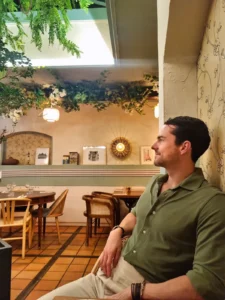
I am French. I grew up in Auvergne, then in Normandy, before living in Paris for ten years. My mother was a naturopath; I was born into the world of essential oils. Hundreds of them were constantly beneath my nostrils, arranged in tight rows on shelves – primarily for their pharmaceutical and culinary properties in essential-oil cooking, hydrosols, and tinctures, but inevitably also for their scents. This olfactory dimension of my childhood, largely unconscious and environmental, awakened much later during a journey to Taiwan. In the mountains of Taiwan, I was walking through a bamboo forest when I came upon a small wooden temple. For a Westerner, the experience of a misty bamboo forest is dreamlike. Upon entering the somewhat dilapidated little temple, I was seized by an aroma of wood, incense, vegetable candle wax, and humidity. The room was cramped and displayed, on a table, a few statues of Chinese deities. I do not know precisely why this experience reawakened my olfactory existence. Afterwards, I asked the cabinetmaker near the temple what wood I had smelled; he explained that it was hinoki, a tree found mainly in Japan and Taiwan, notable for its exceptional durability and resistance to mould and insects. This encounter marked the genesis of my first perfume: Rêve d’Absolu. “Rêve” for the dreamlike dimension of the experience; “Absolu” to evoke the divine, durable, and resistant nature of this wood, from which statues of the gods are notably carved.
Both my parents were deeply committed to plant-based health and alternative medicine. There was no genuine turning point, merely a gradual awareness of an inheritance already acquired. Around the age of fourteen or fifteen, I began to question and then to understand the logics and worldviews that motivated their practices. Until then, I had lived within my parents’ world – a world I did not always comprehend, as is true of all children. It has been a slow process of maturation, both intellectual and sensory, as well as a philosophical undertaking. Confronted with the cold linearity of chemical purity, I chose the living triumph of impurity and the variability inherent in natural materials. A natural perfume is a recipe whose perfect reproduction is impossible; these are vintages that owe their uniqueness and their subtle variations, year after year, to the earth, the climate, and human hands.
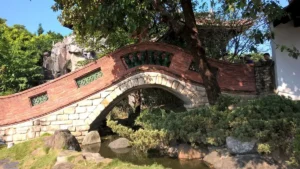
Natural perfume is inherently paradoxical. Whereas modernity has made fragrance a primarily social object – one that must please the wearer, often from a purely olfactory rather than symbolic standpoint, while also serving as a projection of seduction and social identity – natural perfume is more intimate and personal. The absence of synthetic molecules diminishes its sillage, its persistence, and its projection; it speaks instead to intimacy, proximity, and ultimately to the wearer’s individual pleasure rather than to any social impression. For me, it is therefore more spiritual and psychological. Audace, for example, arose from a desire for social extraversion at a time when solitary routine weighed heavily upon me. The perfume was conceived as the activator of that desire – its encouragement and its symbolic embodiment: fresh, dynamic, and extraverted, projecting both lightness and serenity. As Jean Pommier observed regarding Chateaubriand’s Génie du christianisme, it is not the book of a convert; it is the book that converted the man. A form of self-persuasion in which intelligence is placed at the service of desire, constructing credible “psychological novels” in one’s own eyes. Here, through perfumery, the aim is likewise to represent and to encourage a desire for change.
Each of my perfumes is conceived in this manner – not first and foremost for a scent I wish to project, but as a symbolic representation, a homage, or a memory. Perfume is sensual, yet it is also meaningful. These are therefore fragrances that are also ideas, offered in the hope that they may evoke and arouse within you that constant interplay between emotion and psyche, between mind and body, between scent and memory.